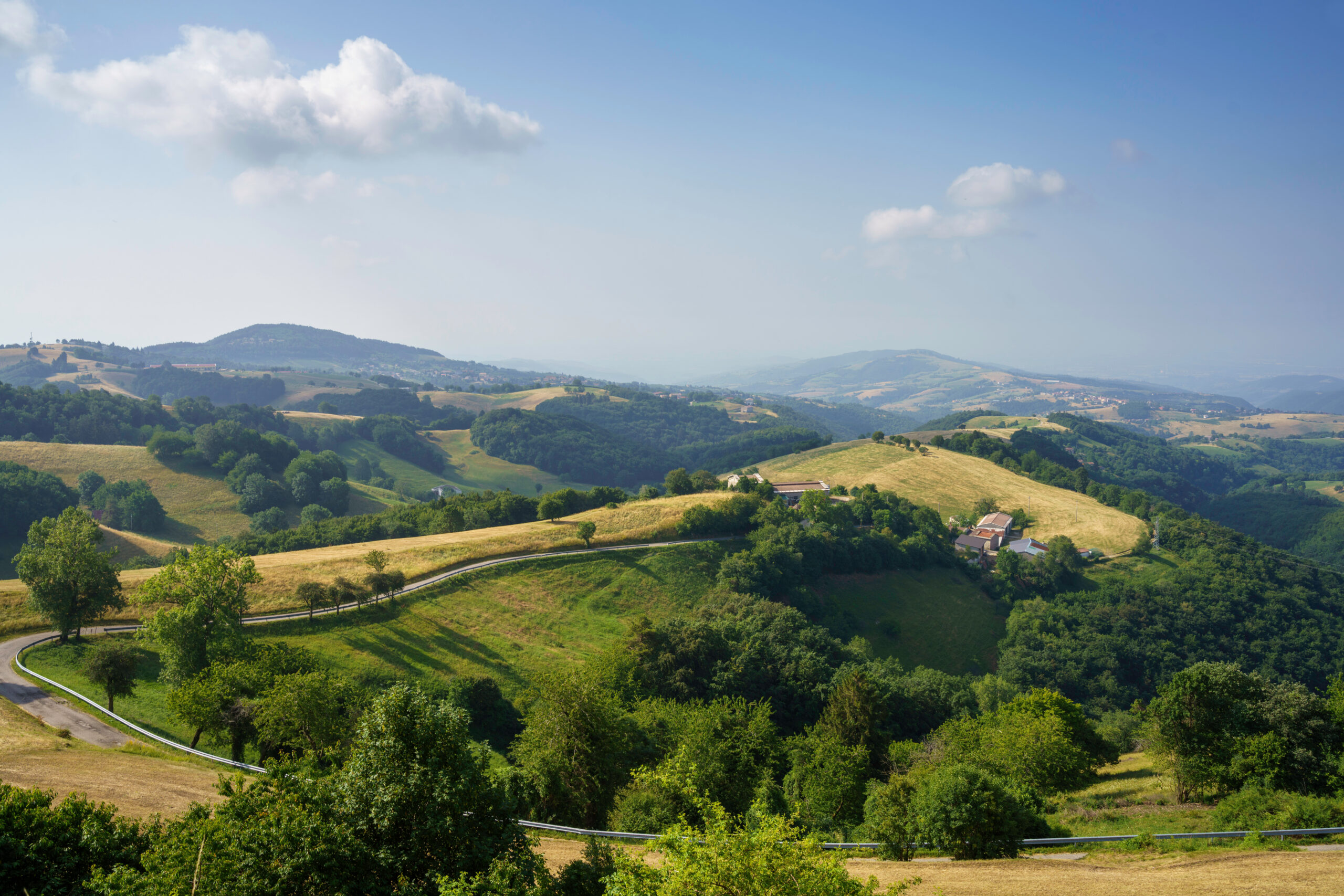
After haved an in-depth study to Soave, ing dedicatlet’s get to know the Dop del Monte Veronese better, the Veneto cheese born from the volcanic soils of Lessinia.
The mountainous area of Lessinia, north of Verona, was a large uninhabited reserve in the Thirteenth century, a place where the villagers of the neighbouring towns used to bring their sheep and goats to graze. On 5 February 1287 the Bishop of Verona, Bartolomeo della Scala, have permitted a group of Cimbri, coming from the Asiago plateau, to inhabit the area and use its resources. The Cimbri mainly dedicated themselves to cattle breeding and they knew the techniques for making cheese very well to have enjoyed the resources of these lands until 1689. The Veronese mountain is particularly suitable for grazing: the Lessini Mountains face south, they do not have steep slopes and they have abundant grass that allow a longer pasturing period than usual. Therefore, a dairy industry dedicated to the production of cow milk cheeses, made with milk that has already undergone a first skimming intended for the production of butter, has naturally developed. Here, as elsewhere in the Alps, milk from several milking processes (“monte”) are combined. The word “monte” probably refers to the production technique that curdled milk from several milkings, which were locally called “monte”. Thanks to the “Monte Veronese” denomination, local production obtained the PDO recognition in 1996. The denomination has been granted for two types of products: “a latte intero” and “d’allevo”, both produced all year round using cow’s milk and are unpasteurized pastes. The first one is a fresh whole milk cheese, its aging ranging from a minimum of 25 days to about 2 months. Whereas, the “d’allevo” variety uses semi-skimmed milk. Aging for this type of cheese lasts for a minimum of 90 days for table cheeses; but if it is for grating, cheese ages for a minimum of 6 months (which can last up to 2 years for the stravecchio). The average weight of the wheel is between 6 to 9 kilos. Slow Food’s Monte Veronese is greatly apt for lengthy maturation periods. It is only made with milk from cows which have grazed from May to October. It fully expresses all the characteristics of a mountain cheese.
The Consortium for the protection of the Monte Veronese PDO (Protected Designation of Origin) cheese started in 1983 to ensure that only cheeses that comply with the production regulation can be sold as Monte Veronese PDO. The Consortium is an association of those who produce and age cheese, already active in the area of Verona since the 70s on a voluntary basis. The Consortium for the protection of the Monte Veronese cheese is a non-profit organization that aims at defending, protecting and promoting the production and trade of Monte Veronese PDO cheese, in all types and ages, and the use of the denomination. It promotes and organizes activities to protect the typicality and the unique characteristics of the Monte Veronese cheese, through information, publications and participation to events, fairs and tastings.
The Monte Veronese PDO is produced in nine dairies. Generally, about 100,000 wheels of Monte Veronese PDO are made every year (two thirds are “latte intero” types, while the remaining are “d’allevo”). Each wheel weighs about 9 kilograms. In the past ten years, production has increased by over 80%. Monte Veronese is mainly sold in the Veneto region, while export does not exceed 15% and mainly refers to Germany, Scandinavian countries and the USA. The Consortium represents the entirety of producers.