Which territories are the protagonists of the HEVA – Volcanic Agriculture of Europe project and how do they differ?
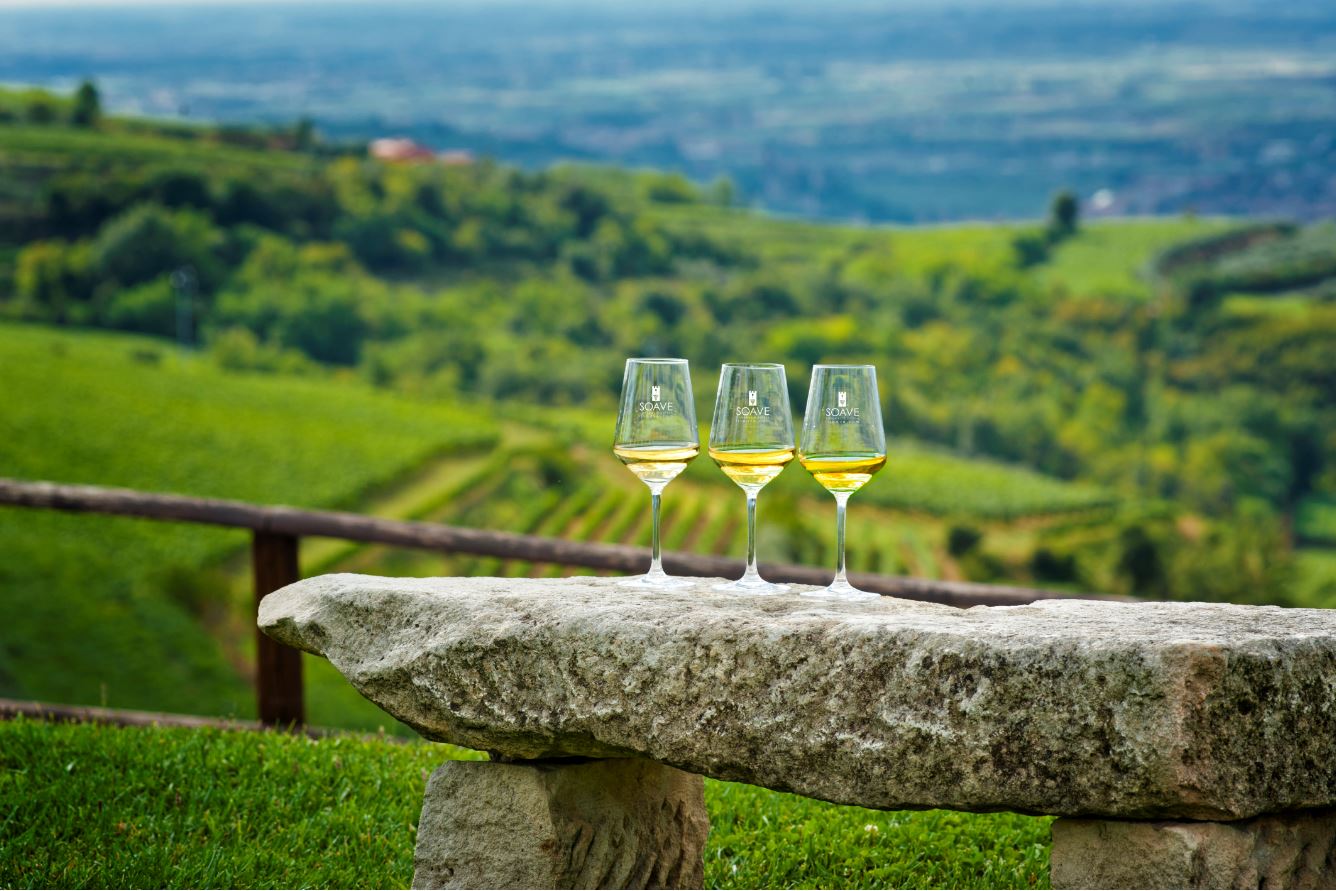
To tell the extraordinary difference and the equally incredible similarities of the territories protagonists of the Heva project, let’s start from Soave, a volcanic territory known throughout the world for the production of exceptional white wines.
SOAVE REGION
Soave is the largest Italian production district specializing in white wine, with almost 7,000 hectares dedicated to the cultivation of local varieties, Garganega and Trebbiano di Soave.
The production area in Soave is located in the eastern part of the hilly arch of the province of Verona (north of the Serenissima highway, between the 18th and the 25th km, between Verona and Venice). Here, the Garganega, the main variety of the denomination, has found an ideal habitat over the centuries. Among the vast and certified fine wines of Verona, only on these hills of tuffaceous soil of volcanic origin with important limestone outcrops, from the Eocene period, has the ideal symbiosis between the environment and grape variety been created for the production of great quality white wines. The use of the term “CLASSICO” together with the denomination “SOAVE”, is reserved to products made with grapes harvested and vinified in the territories of Soave and Monteforte d’Alpone, where the original area, called “historical zone”, can be found.
Although limited to a hilly area of only 12,000 hectares, the vineyard of Soave represents on its own more than 3% of the denomination-based productive system in Italy.
Soave is the first Italian wine to be recognized as “Typical wine” in 1931 and its production area has been delimited. Soave’s system currently counts 2,500 winegrowers who work hard to cultivate 6,000 hectares of Garganega growing on hills, for a production of a little over 48 million bottles.
It is undoubtedly the most exported Italian still white wine, with a value of more than 80% of the production.
Determination and organizational efficiency have enabled a highly segmented production (there are almost 3,000 farms with an average size of a little more than 2 hectares) to build a system that, over the years, has been able to return the producers’ income and leave them satisfied, without losing sight of their dedication to the production of white wines from local varieties such as the Garganega and the Trebbiano di Soave.
In 2019, the Wine Committee of the Ministry of Agriculture definitely approved the inclusion of UGAs in the regulation of the Soave DOC. These are areas located within the Soave denomination that have historical significance for the wineries and the Consortium for their particular ability to produce wines that strongly embody the soil and climate of the area from which they originate.